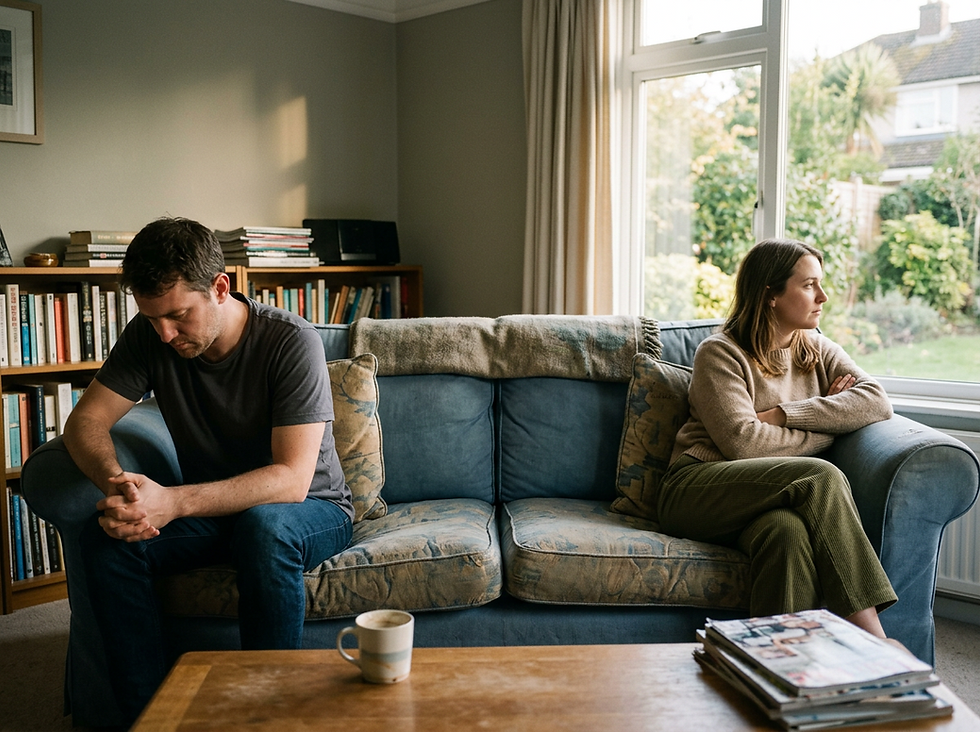
When you procrastinate, what do you feel first: fear, boredom, confusion or overwhelm?

You have a to-do list, enough time to start, and a dozen reasons to put it off. What if the problem isn't your discipline alone?
Then you do something else.
You check the fridge. You reorganize one drawer. You answer a message that could have waited. Ten minutes becomes an hour, and now the task feels even heavier than before.
It is easy to call this laziness. That explanation is simple, sharp, and usually wrong. Procrastination often starts before behavior. It starts with a feeling your brain wants to escape.
When you procrastinate, ask a better question: What do I feel first? Is it boredom, fear, confusion, overwhelm, or something harder to name?

Procrastination is often emotional avoidance
Procrastination can look like a time management problem. Sometimes it is. But many people know exactly what they need to do and still cannot make themselves begin.
That gap matters.
A task can trigger discomfort before it even starts. Your brain reads the discomfort as danger, then reaches for relief. Relief might look like scrolling, snacking, cleaning, researching, napping, or doing a less important task that feels safer.
The relief works for a moment. That is why the habit sticks.
Then the pressure grows. The task is still there, but now it carries guilt too. More guilt creates more discomfort, and more discomfort creates more avoidance.
This is why shaming yourself rarely helps you begin. Shame adds weight to a task that already feels heavy.
Fear makes starting feel risky
Fear is one of the most common engines behind procrastination.
You may not feel panic. Fear can be quieter than that. It can sound like:
What if I do this badly?
What if I find out I am not good enough?
What if someone judges the result?
What if I put in effort and it still fails?
Fear turns a normal task into a test of identity. Writing an email becomes proof of competence. Starting a workout becomes proof of discipline. Applying for something becomes proof of worth.
No wonder the brain stalls.
A useful move is to shrink the emotional stakes. Instead of saying, “I need to finish this perfectly,” try, “I need to make a rough version.” Instead of “I have to commit to the whole project,” try, “I will work for 10 minutes and stop.”
Fear usually argues for delay. Small action gives it less room to argue.
Boredom makes everything feel sticky
Some tasks are not scary. They are dull.
Forms, laundry, maintenance calls, budgeting, sorting files, cleaning the bathroom, repeating the same practice drill. These tasks may not threaten your self-worth, but they offer very little reward right now.
Boredom is uncomfortable in its own way. It creates restlessness. Your mind looks for stimulation, novelty, or escape. That is why a boring task can lose to almost anything else.
The fix is not always to “care more.” Some tasks will remain boring. The goal is to make them easier to enter.
Try pairing the task with a simple support:
Play one familiar playlist.
Set a timer for 15 minutes.
Do the task at the same time each week.
Keep the needed supplies visible.
Use a checklist so you can see progress.
For boring tasks, motivation may arrive late. Structure can carry you until it does.
Confusion makes your brain search for exits
Confusion is sneaky because it often disguises itself as avoidance.
You may think, “I keep putting this off,” when the real problem is that you do not know the next clear step.
A task like “fix my finances” is too large. So is “get healthy,” “clean the house,” “plan the trip,” or “update my resume.” These are not actions. They are categories.
The brain struggles to start a category.
Turn the task into something physical and specific. Not “work on taxes,” but “find last year’s return.” Not “clean the house,” but “put dishes in the dishwasher.” Not “write the report,” but “open the document and write five messy bullet points.”
When the next step is clear, resistance often drops. You still may not feel excited, but you no longer have to fight through fog.

Overwhelm can freeze you before you move
Overwhelm happens when the task feels too large, too urgent, too emotional, or too tangled.
The body may respond with a kind of shutdown. You are not calmly deciding to avoid the task. You feel flooded. Even choosing where to begin can feel like too much.
This is where the phrase “just do it” fails. If someone feels overwhelmed, more pressure can make the system lock up harder.
Start by lowering the intensity. Take one slow breath. Put both feet on the floor. Name what is happening: “I feel overwhelmed, and I can take one small step.”
Then choose the smallest useful action. Make it almost embarrassingly small.
Open the bag.
Put one item away.
Write one sentence.
Send one text.
Read one paragraph.
Set one appointment reminder.
If you are alone, enough pressure may build that it feels impossible to start. In that case, use connection as a tool. Sit near someone while you work, send a “starting now” message, or ask for help choosing the first step.
Self-criticism feels motivating, but it usually backfires
Many people shame themselves because they believe it will create discipline.
Sometimes fear can force short-term action. But self-attack is a costly fuel. It teaches the brain to associate tasks with punishment. Over time, beginning feels worse.
There is a better kind of accountability. It sounds firm, but not cruel.
Instead of “I am lazy,” try “I am avoiding this, and I want to understand why.”
Instead of “What is wrong with me?” try “What feeling shows up when I think about starting?”
Instead of “I have to finish everything,” try “What is the next useful step?”
Compassion does not mean letting yourself off the hook. It means removing the extra shame so the work becomes possible.
A simple way to diagnose your procrastination
The next time you notice yourself avoiding a task, pause for 30 seconds. Do not try to fix it yet. Just identify the main feeling.
Ask:
Am I afraid of the result or judgment?
Am I bored and craving stimulation?
Am I confused about what to do next?
Am I overwhelmed by the size or emotion of the task?
Then match the response to the feeling.
Feeling | What helps |
Fear | Lower the stakes and make a rough first attempt |
Boredom | Add structure, a timer, or a small reward |
Confusion | define the next visible action |
Overwhelm | regulate first, then choose a tiny step |
You do not need a perfect personality to begin. You need a clearer read on what is stopping you.
The next time procrastination shows up, resist the urge to insult yourself. Get curious first. The task may not be the real problem. The feeling attached to it may be asking for attention, support, or a smaller doorway in.